Listen to this Article
What’s That, You Say?
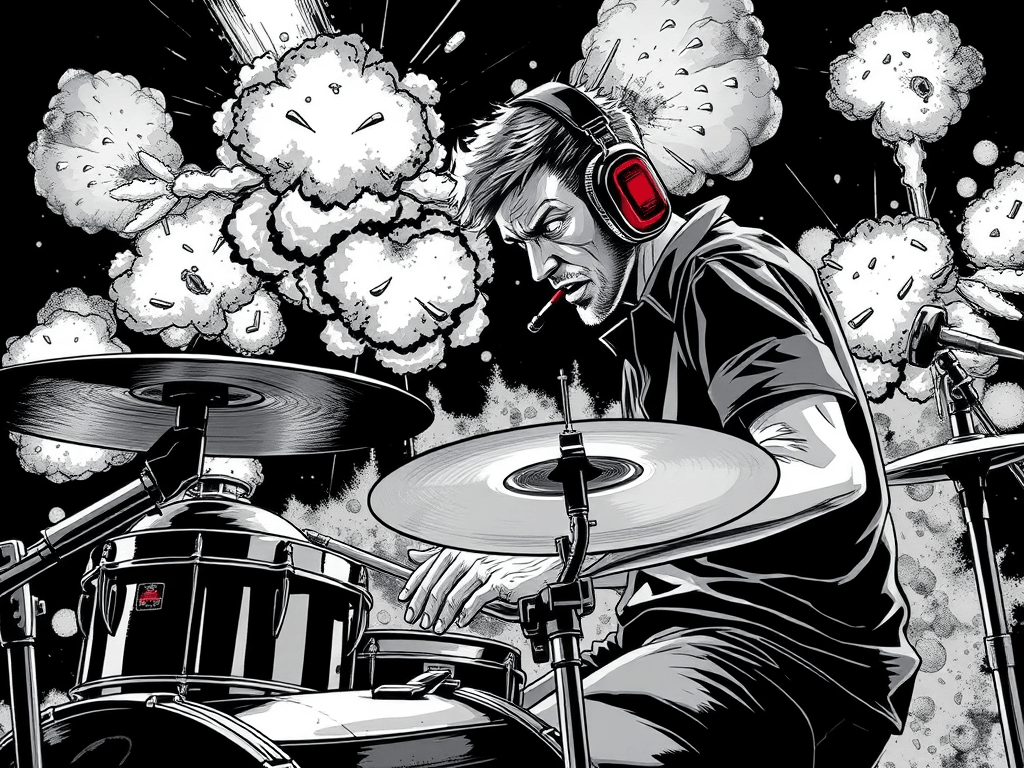
Yes, you heard me right, my fellow groove-meisters! Our ears—much like our limbs—are an essential part of making music. Here’s a juicy fact for you: If you’re a heavy-handed player and lay down a simple groove between your hi-hat, kick, and snare for four minutes (no crashes, no fills), you’re subjecting your ears to decibel levels equivalent to standing 100 feet away from a space shuttle launch. That’s 150+ dB, a level that can cause permanent damage after just a few days of practice.
The Science of Hearing Damage
Have you ever walked out of a loud concert or an intense jam session with your ears feeling plugged? That’s called noise-induced temporary threshold shift—a temporary hearing deficit. Your ears need about 14 hours to recover, provided you aren’t exposed to similar or louder noise in that timeframe. But if high-volume exposure becomes consistent, that temporary threshold shift turns permanent.
The effects of hearing loss are downright scary. Tinnitus, a constant ringing in the ears, can be a drummer’s apocalypse. While objective tinnitus can sometimes be treated, subjective tinnitus is permanent—like taxes, it’s forever. Some sufferers have even been driven to severe depression due to the unrelenting noise.
The Good News: Prevention is Possible!
Our drumming forebears didn’t have access to the information and technology we do today. Many suffered in silence (literally). Luckily, modern ear protection options make our lives much easier. Ultimately, though, no one can force you to protect your ears—except maybe future-you, cursing your past self for not doing so.
Choosing the Right Hearing Protection
1. Hearing Muffs: The Unsung Hero
Drumsmith extraordinaire Ronn Dunnett suggests Peltor 3M hearing muffs, available at most hardware stores. A pro tip: remove the foam insert inside the muffs. The drums will sound incredible, and though you slightly reduce the protection level, it’s still substantial enough to prevent permanent damage. These are a go-to for fashion-conscious drummers in rehearsal spaces and drum clinics. Trust me—your 90-year-old self will thank you.
2. Discreet Earplugs
For a lower-profile option, Vic Firth and Vater make excellent musician-friendly earplugs. While these won’t make you look like Princess Leia, their protection is slightly lower than hearing muffs. Designed to filter out damaging frequencies while maintaining sound clarity, they eliminate the muffled effect of foam plugs while keeping your eardrums safe.
3. Custom-Fit Silicone Earplugs
If you’re serious about hearing protection, custom-fit silicone earplugs from an ear specialist are the gold standard. These plugs are molded specifically for your ears and offer maximum comfort and protection. You can even have them fitted to function as in-ear monitors, killing two birds with one stone (Editor’s note: No birds were harmed in the making of this article). The price is steep, but so is the cost of years of medication to manage tinnitus—or worse, hearing loss severe enough to keep you from drumming.
In-Ear Monitoring Systems
A popular solution for working drummers is a quality set of earbuds paired with a small soundboard. Brands like Shure and Sony offer solid options for around $150. However, be aware: this setup is not fail-safe. A sudden blast of feedback could be game over for your ears. Investing in a feedback suppression unit ($150–$300) is a smart move to prevent potential disasters.
Another alternative? All-electronic rehearsals. If your band is open to the idea, switching to e-drums, multi-effects processors, and a JamHub system can create a low-volume rehearsal environment where everyone wears headphones and controls their own mix. This setup is often cheaper than a full band PA system and gives you greater flexibility with rehearsal spaces.
Controlling Your Stage Volume
Ask yourself: Do I really need to be heard outside the venue? Does playing loud serve the song—or your ego?
When one band member turns up, the whole band follows suit. On large stages, this might not be an issue, but in smaller venues, high stage volume can be damaging—both to your ears and your band’s overall sound. True professionals know how to play to the environment rather than overpower it. Unless you’re at a drum clinic, no one wants to hear the drummer drown out the singer.
Final Thought: The Damage is Real
Many drummers fall into the trap of believing, “It won’t happen to me.” The truth is, if you play on a loud stage consistently, you’ve already sustained some damage. It might not be obvious now, but years down the line, it will catch up to you. Protect your ears. Your future self will be grateful.
Sean Mitchell is a drummer/artist, songwriter and the creator of Drum Geek.






 DRUM GEEK